Life & ideas
16 June 2024 · 6 min read By Nikesh Lagun
16 June 2024 · 6 min read
The Power of Small Steps: Developing the New Pattern of Behavior for Permanent Reformation
By Nikesh LagunTiny Changes, Remarkable Results
By Nikesh LagunTiny Changes, Remarkable Results
Hey friends,
I want to share a morsel of habit formation this week – If you're going to learn the mindset of procrastination, click here.
Changing our habits doesn’t start with drastic changes. All the small kinds of stuff and tweaks matter to your drastic changes. The gradual increment in habit formation leads one to change vastly over time. This week is all about habit formation and staying motivated. I will share some of the habits I formed and summarise Atomic Habits by James Clear this week.
Atomic Habit is The New York Times bestseller book that explains the most fundamental information about habit formation, so you can accomplish more by focusing on less.
If you’re planning for a major transformation in life then certainly you are trying to include all the planned habits in your routine for a single day. This not only makes you feel disoriented but also makes you quit your habit formation and stick to the old unproductive habits.
This week we will talk about 4 major acumens included in Atomic Habits by James Clear. We will discuss the 1% Rule, focus on a system, identity change, and fundamental laws of behavior changes.
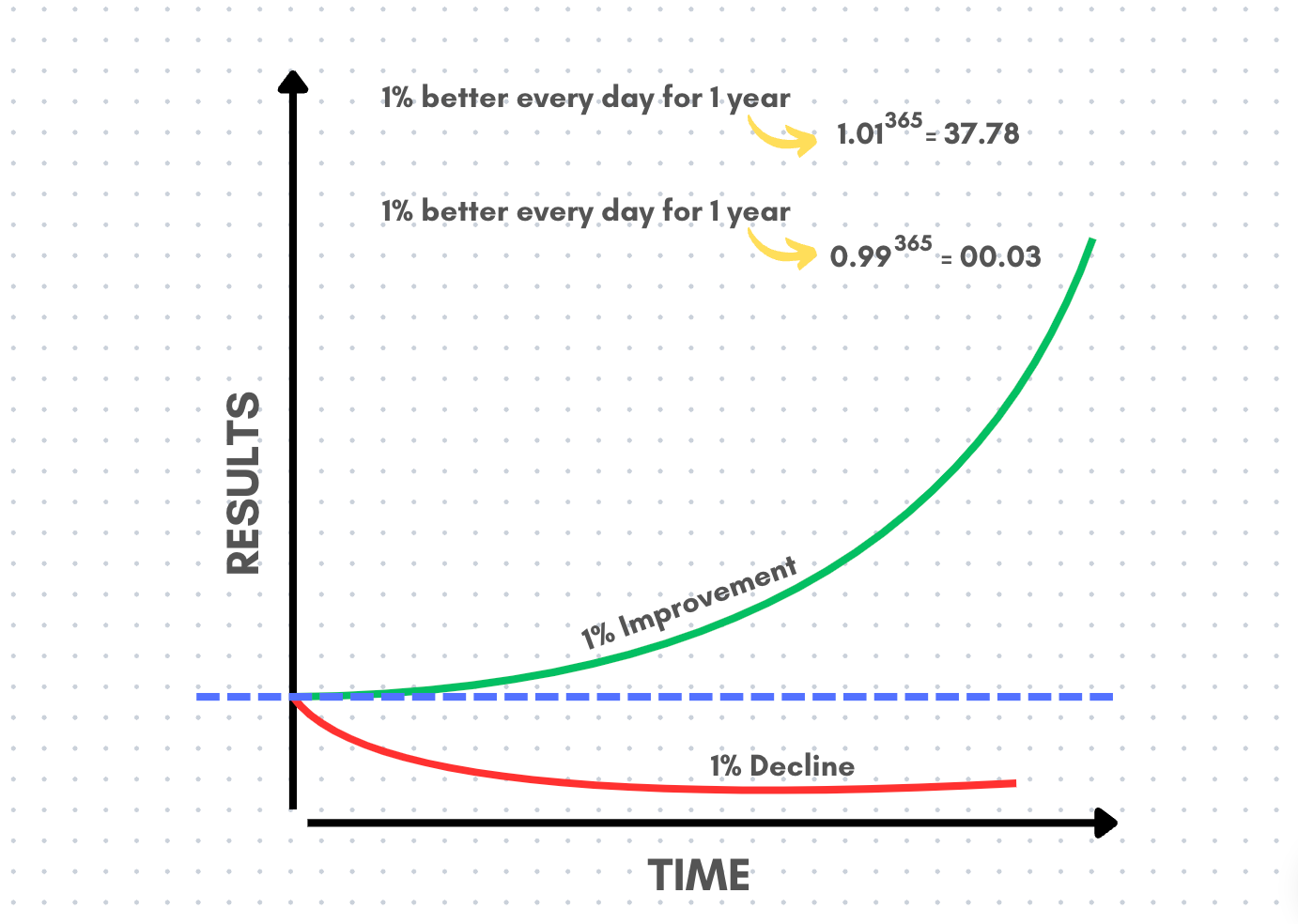
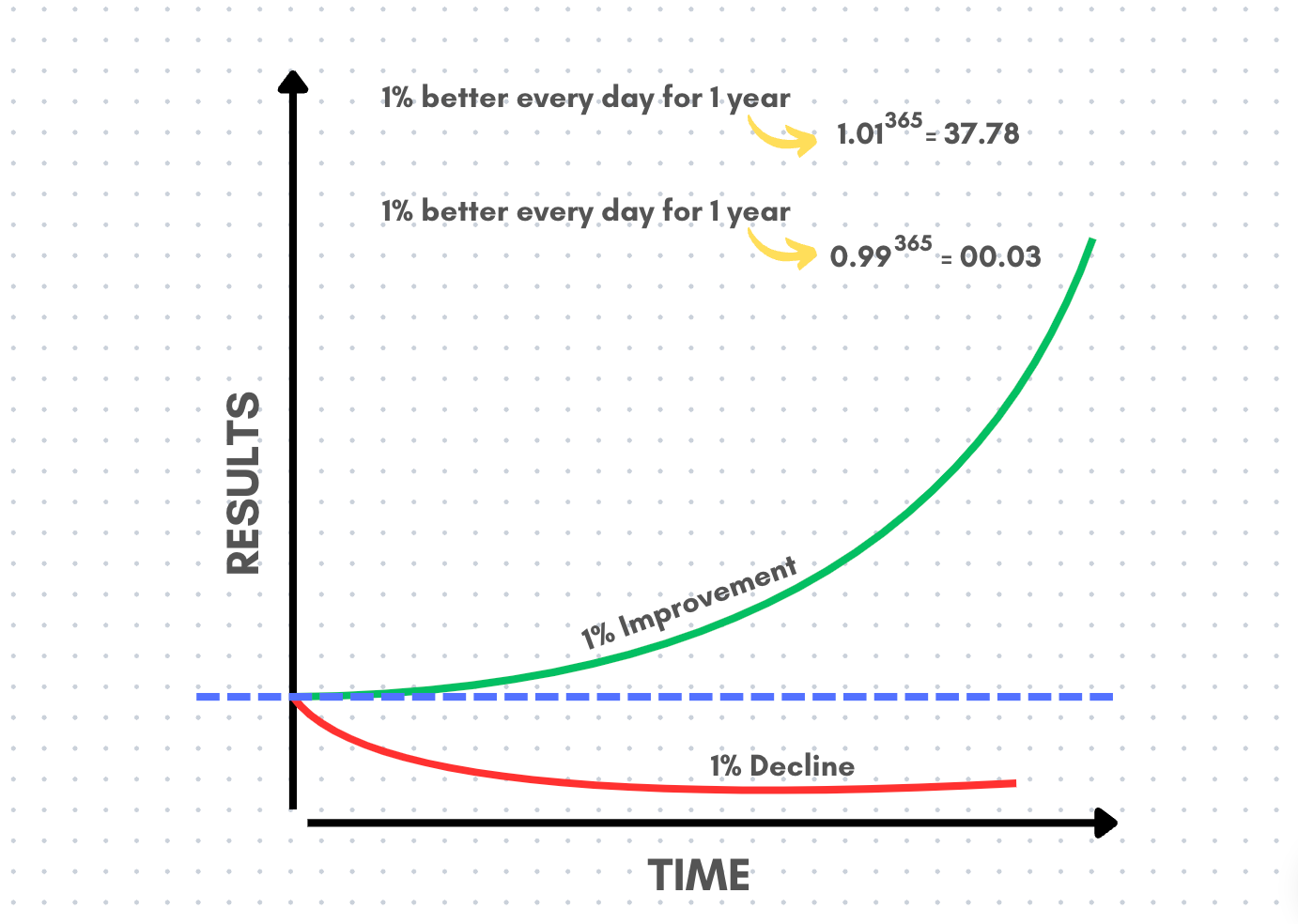
James Clear says that if we can get 1% better each day for a year we'll end up 37 times better by the time we're done but if we get 1% worse each day for one year we'll go down nearly to zero. He clearly states that habits are the compound interest of self-improvement which means they don’t seem to make much of a difference initially but their impact can lead to epic results in months or years.
After high school, I started exercising regularly, aiming for 30 minutes daily. Despite challenges, I used streak maintenance, focus, monthly challenges, and workout notifications to stay motivated and avoid unproductive habits.
After experimenting with reading and listening to audiobooks, I started reading for 10 minutes daily, which helped me stay productive and feel more capable of incorporating these activities into my daily routine.
“Habits are a double-edged sword. Bad habits can cut you down just as easily as good habits can build you up.” - James Clear
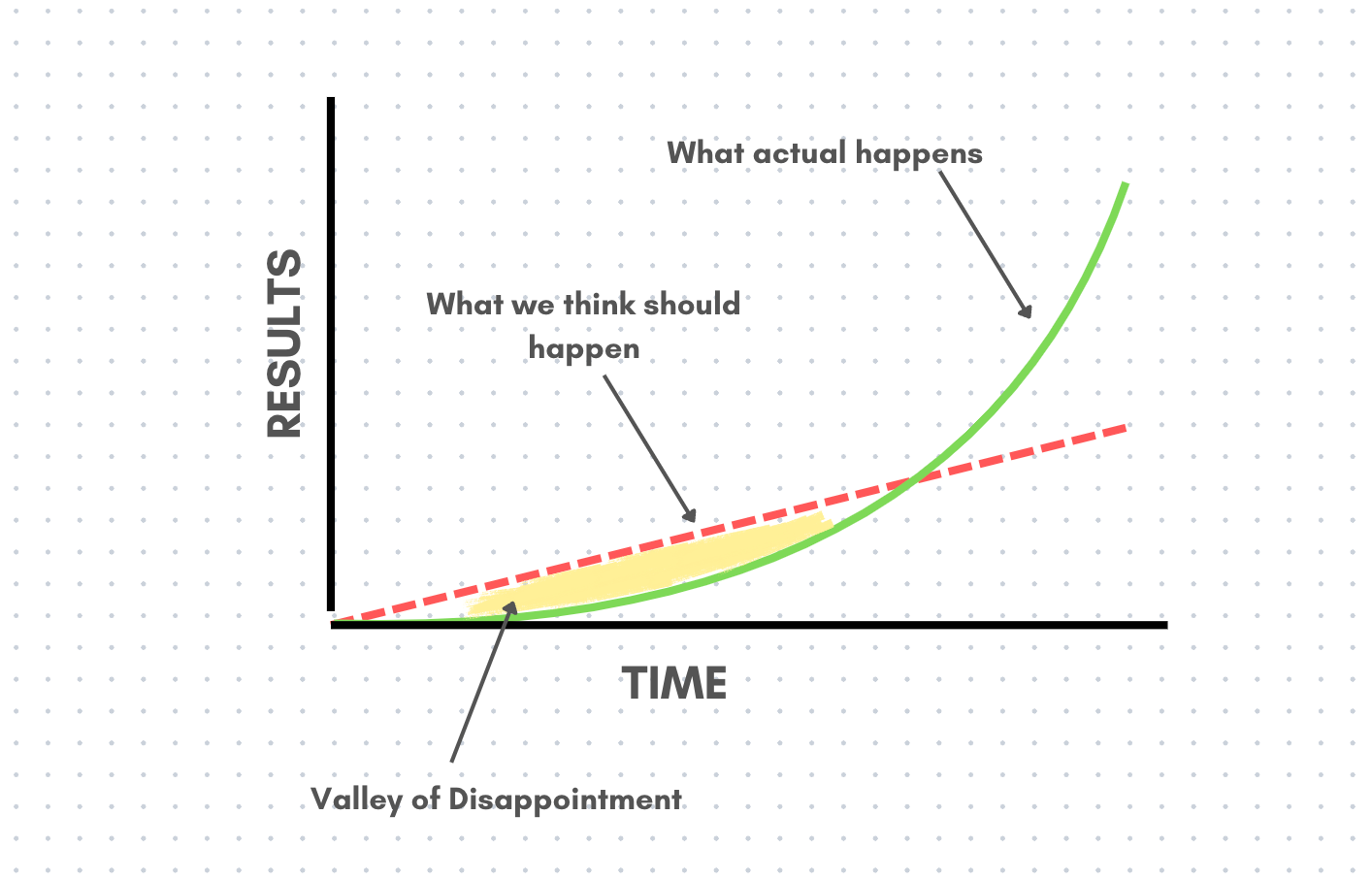
There is a critical threshold that we need to cross so that we can see the difference it made in our lives. There is a time when we are actually working hard to make a difference still we can’t figure out the progress, it’s called the valley of disappointment. Most of us quit in this phase and turn into our older selves.
Clear mentions that there are basically 4 problems with goal setting. They are:
Goal setting is not free from survivorship bias because it tends to mainly favor success while dismissing the similarities of the achievements with similar goal-oriented people. This is simply incorrect as it is the series of small improvements that are at the core of success hence the goal cannot distinguish the victors from the vanquished.
However, it should be noted that attaining a goal such as ‘to clean a messy room’ alters the state of affairs only. To not develop a new pile of clutter, one needs to sustain the same habits. If we are to improve for good, then we have to demonstrate system improvements or problem-solving at the cause level that addresses the inputs. In other words, solving a problem while altering its root system generates more efficiency than when one just solves a problem.
False assumptions often enter into the picture within the context of goals where happiness will come as soon as goals are accomplished, and the emphasis shifts to the next level. This can lead to a hedonistic or a utilitarian version of happiness because there are many ways humanity can be prosperous. The first inclination of ‘system-ism’ gives preference to a process over its outcome; thus, happiness may be attained whenever the system is active, and a `system’ may be effective in one of its numerous forms, other than the intended.
An epidemiologic change relates to goal motivation; persons quit exercising when they reach the desired goal weight. Goals and structures for building are strategy and targets to get to kidnap the game and actual strategic planning is free from targets, aims, and interests in the form of constant enhancement and dedication on the procedure. It is viewed to be useful in preventing relapse to previous behavior hence promoting triumphant following of targets.
“You do not rise to the level of your goals. You fall to the level of your systems” - James Clear
Outcomes, process, and identity are three layers of change. Outcomes consist of altering outcomes such as weight loss or publishing a book. The process entails changing habits and systems like putting in place a new routine or coming up with a meditation practice. Identity comprises changing beliefs like worldview and self-image. The issue is not the degree of change but the way it is headed. To build lasting habits focus on whom you would like to become rather than outcome-based habits.
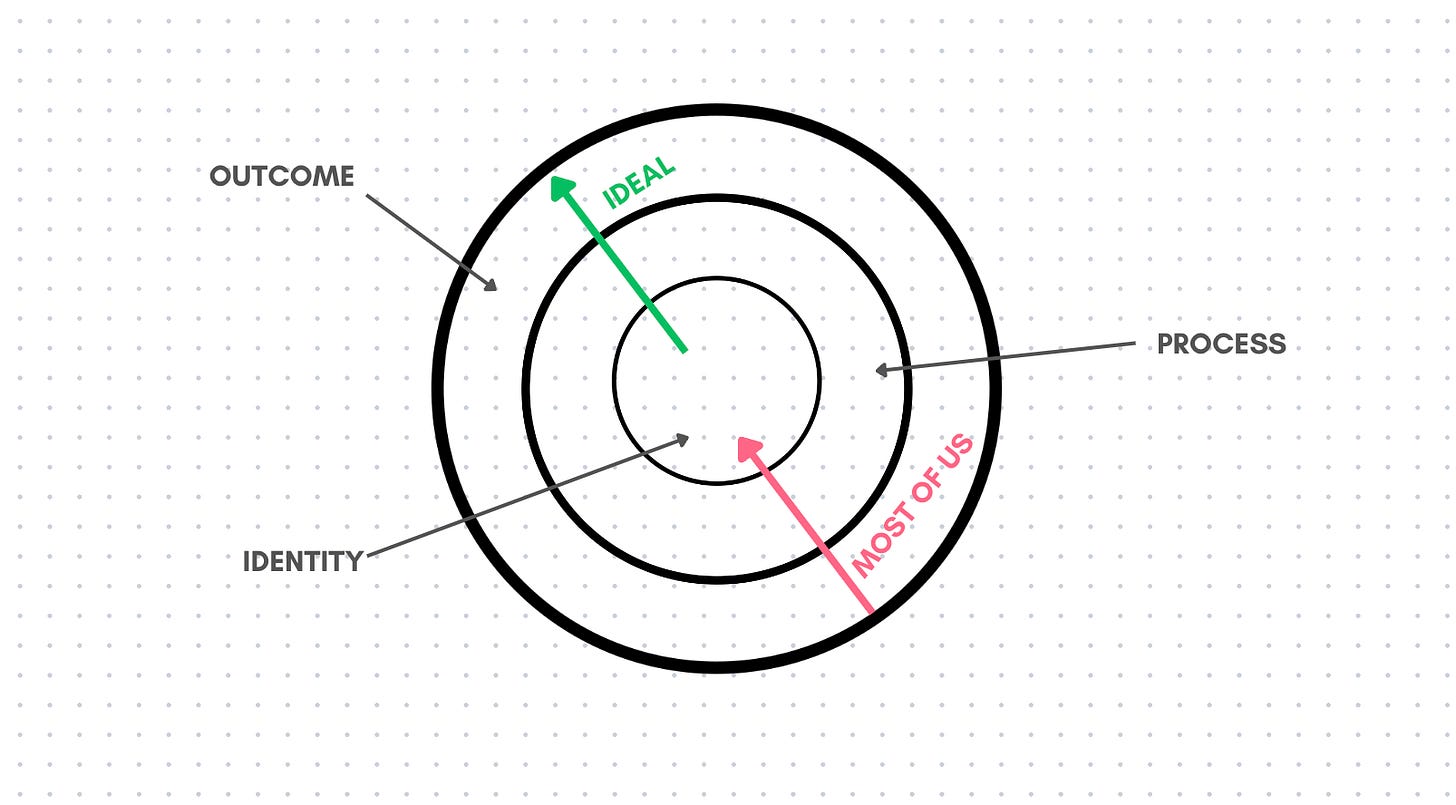
Beforehand, I used to think of becoming a productivity expert like Ai Abdaal, Iman Gadzhi, Jun Yuh, and many more. Those thinking were outcome-based plans. But after reading this book, as an identity-based plan, instead, I want to become myself so that I can become a productivity expert, let’s wait for the right time.
“The most effective way to change your habits is to focus not on what you want to achieve, but on who you wish to become.” - James Clear
James endorses that the main fundamental laws of behavior changes are cue, craving, response, and reward. The cue leads to the craving which in turn is followed by a response that leads to a reward, which satisfies the craving and becomes linked to the cue to form what is known as the habit loop. This can be categorized into two phases: the problem phase and the solution phase. In the problem phase cue and carving lead to the realization that something needs to be changed whereas the solution phase includes response and reward leading to action and achieving desired changes.
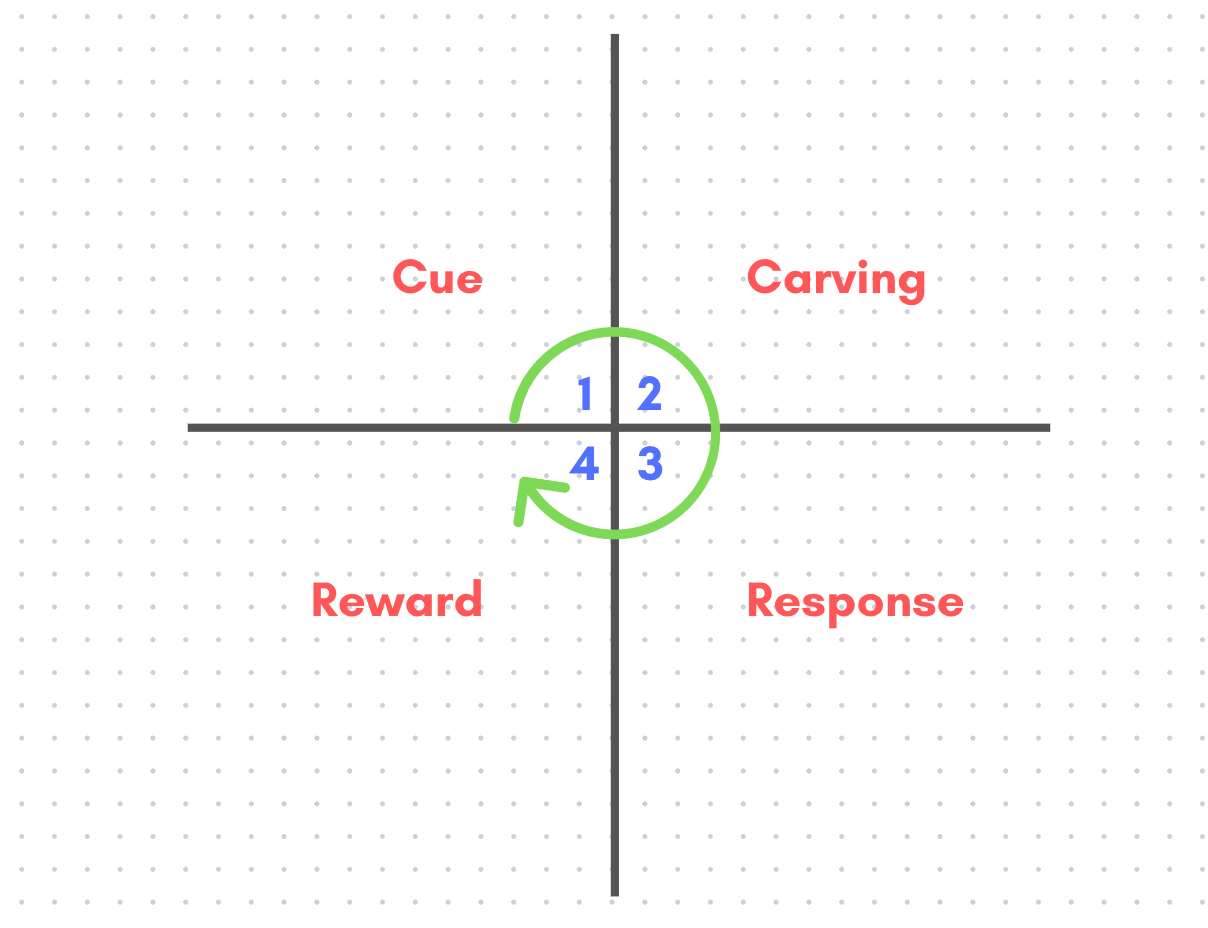
For instance, my notification alerts me every moment, so I am always eager to check those notifications and I do check them and finally, I can breathe with happiness. This is the phase of fundamental laws of behavior changes from cue to reward.
The Four Laws of Behavior Change is a simple set of rules we can use to build better habits. They are:
Creating a Good Habit
Cue: make it obvious
Craving: make it attractive
Response: make it easy
Reward: make it satisfying
By inverting this law we can break a bad habit.
Breaking a Bad Habit
Inversion of Cue: Make it invisible.
Inversion of Craving: Make it unattractive.
Inversion of Response: Make it difficult.
Inversion of Reward: Make it unsatisfying.
These are the things that I actually implement for my good and productive habit formation.
"True transformation is not about reaching a goal but about becoming the person who consistently practices the habits that lead to that goal." — Inspired by James Clear, Atomic Habits
Have a great week!
Nikesh Lagun
From Atomic Habits by James Clear.
Author and researcher. I write about why starting and staying focused are hard, and how to make them easier.
One research-backed idea a month, straight to your inbox.
Originally sent in the Lagunian Dispatch newsletter. View the original on Substack.