Stress & energy
7 September 2025 · 4 min read By Nikesh Lagun
7 September 2025 · 4 min read
Burnout: The hidden cognitive disconnect you’re missing
By Nikesh LagunHow Flexion and Grain impact your energy, and why traditional fixes don’t work.
By Nikesh LagunHow Flexion and Grain impact your energy, and why traditional fixes don’t work.
Hey friends,
Burnout.
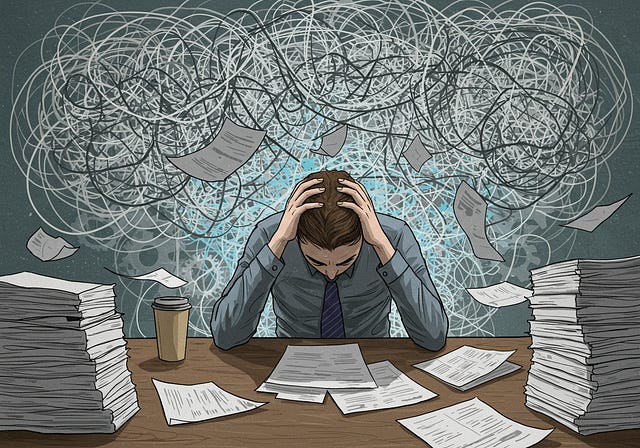
We hear the term all the time, usually tied to working too much or feeling overwhelmed. But here’s something I’ve discovered through years of work in Cognitive Drive Architecture (CDA): burnout isn’t always about doing too much. Sometimes, it's about the task itself. More specifically, it's about the disconnect between how your brain works and the task you're doing. The issue isn't about adding more breaks or finding more time to rest; it's about fixing that mismatch.
I’ve developed CDA as a fresh way to understand motivation, behavior, and cognition. It's different from traditional models of motivation theory or attention; it introduces concepts that are more in tune with how human behavior actually works.
The core of CDA revolves around something I call Lagunian Dynamics, which explains how our cognitive systems function. There are several key variables, like Flexion, Grain, Primode, CAP, Anchory, and Slip, that affect how we engage with tasks. When burnout happens, it’s often because these variables aren't aligned with the work we’re doing. So, let’s look at why this happens, focusing especially on Flexion and Grain, and how understanding these can give us a way out of burnout.
In CDA, burnout often has less to do with doing too much work and more to do with how your brain connects to the task you're working on. When Flexion is low and Grain is high, you’re setting yourself up for burnout.
Flexion refers to the ability to adapt your approach as a task evolves. When Flexion is low, the task becomes rigid. You can’t adjust or shift your strategy to match how things are changing, which can leave you feeling stuck. That stuck feeling is one of the biggest drivers of burnout. You’re not necessarily working harder than usual, but the inability to adjust to the task at hand can drain you mentally.
Grain, on the other hand, is about how detailed a task is. Tasks that demand constant attention to small details are mentally exhausting. When you have to focus on tiny pieces of information without a break, it leads to cognitive overload. This mental strain contributes to burnout. It’s not just that you’re busy; it’s that the task is draining more mental energy than you can sustain.
So, here’s the kicker: burnout happens when you’re faced with tasks that demand too much energy without allowing for flexibility or relief. That’s the real reason burnout hits, especially when Flexion is low and Grain is high.
When both Flexion and Grain aren’t in sync, you hit a cognitive bottleneck. Low Flexion means you can’t adapt as the task changes, and high Grain means you're focusing too much on tiny details, draining your cognitive resources. Together, this creates the perfect storm for burnout.
The typical solution to burnout is usually more breaks. And yes, breaks can help, but they don’t solve the core problem. The problem is that your task isn’t aligned with your cognitive needs. More breaks won’t help if the task itself is too rigid or too overwhelming. What you really need is system relief.
System relief means adjusting how you interact with the task. Instead of continuing to power through tasks that are too rigid (low Flexion) or too demanding (high Grain), you need to introduce changes that better align your cognitive system with the task. It’s about finding a balance between flexibility and detail.
To tackle burnout, you need to make adjustments in how you approach your work. Increase Flexion so that you can adapt to the task as it evolves, reduce Grain by cutting back on unnecessary details, and introduce some variety to your tasks so that your cognitive system doesn’t get stuck in a loop. Cognitive reframing, changing the way you think about a task, can also help make things feel more manageable.
At the heart of CDA, burnout isn’t just about doing too much work; it’s about the misalignment between your cognitive system and the task. When a task is either too rigid (low Flexion) or too detailed (high Grain), it drains your mental energy, leading to burnout.
By adjusting Flexion and Grain, you can ease that cognitive strain. Instead of simply adding more breaks, focus on tasks that allow for more flexibility and less overload. This system relief will help you stay engaged, energized, and productive without burning out. By applying CDA and Lagunian Dynamics, we can go beyond traditional ideas of burnout and engage with our work in a way that better respects our cognitive drive.
Wishing you a lighter, easier week ahead,
Nikesh Lagun
🎥 Video: Dr. Rege explores how cognitive overload and misalignment can lead to persistent fatigue, even with adequate rest. It underscores the importance of aligning tasks with cognitive needs to prevent burnout.
Author and researcher. I write about why starting and staying focused are hard, and how to make them easier.
One research-backed idea a month, straight to your inbox.
Originally sent in the Lagunian Dispatch newsletter. View the original on Substack.